Clean pet supplies protect more than appearance. They support safer eating, sleeping, chewing, and everyday contact. Yet many owners clean bowls and toys only when odors become obvious. That delay can allow saliva, food oils, dirt, and microorganisms to build up in hidden seams.
Dr. Tina Wismer, DVM, senior director of the ASPCA Animal Poison Control Center, offers practical safety guidance: “Keep pets away from cleaning products until they are completely dry.” This reminder matters during every cleaning routine. A damp disinfectant residue can remain on a rubber toy or food mat. Pets may lick it within seconds.
This guide, “10 Tips for Cleaning Pet Supplies Properly,” explains How to clean pet supplies properly without making the process complicated. It covers food bowls, water fountains, collars, leashes, beds, crates, litter tools, brushes, and chew toys. Each item needs a method suited to its material and purpose.
Start with warm water, mild dish soap, and a clean brush. Rinse thoroughly. Dry completely.
Some supplies also need manufacturer-approved washing instructions. Fabric items may shrink, while cracked plastic can hold residue. I once assumed a quick rinse was enough. It was not. The bowl looked clean, but its underside felt greasy.
That small mistake is worth remembering. Clean-looking does not always mean hygienic. Inspect supplies regularly, replace damaged items, and avoid mixing cleaning chemicals. A careful routine takes minutes. It can prevent avoidable irritation and unpleasant odors.
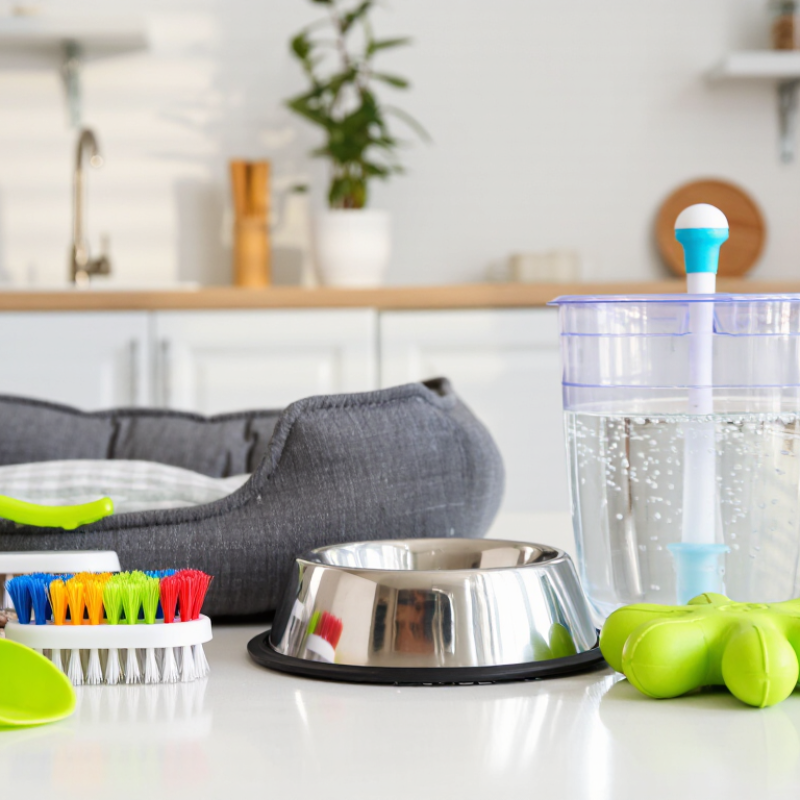
CDC reports that six in ten known infectious diseases in people can spread from animals. That finding makes bowls, toys, bedding, and leashes worth assessing, not fearing. Germs may travel through saliva, urine, feces, or damp surfaces. Puppies, older adults, pregnant people, and anyone with weak immunity may face greater risk. I have seen clean-looking water bowls develop a slippery film within one day. Appearance is not proof of safety.
Tip 1: Wash hands before and after cleaning.
Tip 2: Remove food scraps with paper towels.
Tip 3: Wash bowls daily with hot, soapy water.
Tip 4: Rinse until no soap remains.
Tip 5: Dry supplies completely. Moisture encourages microbial growth.
Do not mix cleaning chemicals. Ever.
Tip 6: Launder bedding separately when possible. Use the warmest safe setting, then dry it fully.
Tip 7: Scrub rubber toys inside cracks and seams.
Tip 8: Replace damaged items; rough edges trap residue.
Tip 9: Clean litter tools outdoors or in a dedicated sink, never near food preparation.
Tip 10: Disinfect only after washing, and follow the product label.
I sometimes overestimate how clean a surface is. That is a useful reminder to inspect handles, undersides, and storage bins. If a pet has diarrhea, unusual discharge, or a diagnosed infection, ask a veterinarian about safer handling and cleaning steps.
10 Tips for Cleaning Pet Supplies Properly
Sort Bowls, Bedding, Toys, and Litter Tools by Material and Cleaning Needs
Begin by sorting supplies by material, because one cleaning method cannot suit everything. CDC guidance recommends washing food and water bowls daily. Wash bowls after every meal when possible, especially if wet food remains. A 2011 NSF International Household Germ Study found pet bowls among the dirtiest household items. That finding deserves attention. Use hot, soapy water, a separate brush, and thorough rinsing. Inspect plastic for scratches, which can trap residue. Replace cracked or deeply worn bowls. Stainless steel and glazed ceramic usually clean more easily.
Launder bedding according to its care label. Use unscented detergent and dry every layer completely. Damp fabric can develop an unpleasant smell quickly. Wash rubber toys separately, and hand-clean fabric toys when they contain squeakers. Check seams before returning toys. My mistake was washing everything together; loose threads and fur clogged the machine filter. I now shake bedding outdoors first. Rinse litter scoops and mats with warm water, then scrub them with a dedicated brush. Keep litter tools away from food-preparation areas. Clean them weekly, or sooner after visible buildup. Follow any disinfectant label carefully, and never mix cleaning chemicals. Some advice sounds simple. It is easy to overlook.
| Tip | Pet Supply | Material or Surface | Recommended Frequency | Cleaning Method | Sanitizing and Safety Guidance | Drying or Replacement Notes |
|---|---|---|---|---|---|---|
| 1 | Food and Water Bowls | Stainless steel, glazed ceramic, or dishwasher-safe plastic | Wash after every meal; refresh water daily | Remove food residue, wash with hot water and unscented dish soap, rinse thoroughly, and dry. | Use separate cleaning tools for pet items when possible. Avoid leaving soap residue, which may irritate the mouth or stomach. | Replace bowls with deep scratches, cracks, rust, or chipped glaze because damaged surfaces are harder to clean. |
| 2 | Food and Water Bowl Mats | Silicone, rubber, plastic, or washable fabric | Wipe daily; wash at least weekly | Shake off crumbs, wipe with warm soapy water, and follow the care label for fabric mats. | Clean underneath the mat to remove trapped moisture and food particles that can support mold growth. | Dry both sides completely before placing the mat back on the floor. Replace if it remains sticky, cracked, or permanently stained. |
| 3 | Washable Bedding and Blankets | Cotton, polyester, fleece, or other machine-washable fabrics | Weekly; more often after accidents or heavy shedding | Shake or vacuum off loose hair, then launder according to the care label with fragrance-free detergent. | Do not mix heavily soiled bedding with household clothing. Avoid fabric softeners if they leave residues that may irritate sensitive skin. | Dry fully before use. Replace bedding with torn fabric, exposed filling, persistent odor, or flattened support. |
| 4 | Plastic or Waterproof Beds | Coated fabric, vinyl, molded plastic, or waterproof foam covers | Wipe several times weekly; deep-clean weekly | Remove hair and debris, wash with mild soap and water, rinse, and clean removable covers separately. | Check the manufacturer’s care instructions before using bleach or other disinfectants. Never combine bleach with ammonia or acidic cleaners. | Air-dry completely, especially around seams and zippers. Replace if the waterproof layer peels or the foam cannot be cleaned thoroughly. |
| 5 | Rubber and Silicone Toys | Solid rubber, silicone, or hard food-grade plastic | Weekly and after contact with dirt or body fluids | Scrub grooves with warm water and unscented dish soap; rinse well. Use a dishwasher only if the toy is labeled dishwasher-safe. | Inspect hollow toys for trapped water or residue. Do not use harsh chemicals that can remain in chewable surfaces. | Dry in a well-ventilated area. Discard toys with deep punctures, loose pieces, cracks, or damaged edges. |
| 6 | Plush and Fabric Toys | Polyester fabric, fleece, cotton, and synthetic filling | Weekly or whenever visibly soiled | Check for loose parts, place washable toys in a laundry bag, wash according to the label, and rinse thoroughly. | Spot-clean non-washable toys with mild soap and a damp cloth. Avoid soaking toys containing electronics or batteries. | Dry completely before giving the toy back to the pet. Replace if stuffing is exposed, seams are open, or odor remains after washing. |
| 7 | Rope Toys | Cotton, hemp, or blended textile fibers | Inspect daily; wash weekly or as needed | Wash with hot water and mild detergent if the care label permits, then rinse thoroughly to remove detergent. | Rope can retain saliva and moisture. Remove it from use if it becomes heavily frayed or develops an odor that washing does not remove. | Dry completely in moving air or sunlight where appropriate. Discard when long threads or loose fibers could be swallowed. |
| 8 | Litter Box or Tray | Hard plastic, coated metal, or stainless steel | Scoop at least daily; wash during litter changes | Empty litter, remove stuck material, scrub with warm water and mild unscented soap, rinse, and dry before refilling. | Avoid strong fragrances and ammonia-based cleaners, which may discourage litter-box use or create irritating fumes. Wash hands afterward. | Replace boxes with deep scratches, cracks, or persistent odor because porous damage can retain waste. |
| 9 | Litter Scoop and Waste Tools | Plastic, coated metal, or stainless steel | Rinse or wipe daily; wash weekly | Remove waste, scrub with hot soapy water, rinse, and allow the tool to dry away from food-preparation areas. | Use disposable gloves when handling waste if desired, and clean the tool separately from kitchen utensils. Disinfect only with a pet-safe product used as directed. | Replace tools with cracked plastic, peeling coatings, or corrosion. Store them in a ventilated location. |
| 10 | Grooming Tools and Collars | Metal pins, plastic handles, nylon, leather, or coated webbing | Clean after heavy use; inspect weekly | Remove hair, wash washable parts with mild soap and water, and wipe leather with a suitable damp cloth rather than soaking it. | Do not share grooming tools between animals when infection or parasites are suspected. Follow veterinary advice for decontamination. | Dry metal parts promptly to reduce rust. Replace collars, leads, or brushes when buckles fail, stitching loosens, or sharp edges appear. |
10 Tips for Cleaning Pet Supplies Properly
Wash food and water bowls after every use. The U.S. Food and Drug Administration advises cleaning pet food bowls and utensils with soap and hot water after feeding. This simple habit removes grease, saliva, and leftover food where bacteria may multiply. Rinse thoroughly, then dry the bowl completely before refilling it. Damp surfaces are easy to overlook.
Tip 1: Use a separate sponge for pet supplies. Tip 2: Scrub the rim and underside, not only the inside. Tip 3: Replace cracked plastic bowls, since scratches can hold residue. Tip 4: Wash water bowls daily, even when they look clean. Biofilm can develop quietly. Tip 5: Clean feeding mats weekly, or sooner after spills. I still miss a splash sometimes. That small mistake deserves attention.
Professional evidence supports this routine. NSF International’s 2011 Household Germ Study ranked pet bowls fourth among 30 commonly tested household items for germ contamination. The finding does not mean every bowl is dangerous. It does show why visible cleanliness is not enough. Tip 6: Use hot, soapy water and a dedicated brush. Tip 7: Keep raw-food utensils separate. Tip 8: Wash hands after handling leftovers. Tip 9: Inspect automatic feeders around seals and hinges. Tip 10: Follow the care instructions for each material. The FDA and public-health guidance also recommend cleaning feeding tools after every use, especially when food remains stuck in corners.
The chart shows a practical seven-day cleaning schedule based on one daily feeding and one daily water refill. FDA pet-food handling guidance recommends washing food and water bowls with soap and hot water after each use. If a bowl is used or refilled more often, clean it more frequently.
Additional best practices include rinsing thoroughly, air-drying supplies completely, cleaning feeding mats regularly, washing hands before and after handling pet food, and replacing cracked or heavily scratched bowls.
Cleaning pet supplies is more than removing visible dirt. I once wiped a food bowl and assumed it was safe. That quick step felt clean, but it did not guarantee disinfection. Start by removing hair, food, and grime with warm water and detergent. Disinfectants work poorly on dirty surfaces.
Choose an EPA-registered disinfectant suitable for the surface. Read the entire label before use. The label states where the product can be used and which germs it targets. Follow the required contact time exactly. The surface must stay visibly wet for that full period. A fast spray and wipe may not work.
Clean bowls, toys, leashes, crates, and grooming tools separately. Keep pets away during cleaning, especially around wet products. Open windows when the label recommends ventilation. Never mix disinfectants or combine them with other cleaners. That shortcut can create dangerous fumes. After contact time ends, rinse items if the label requires it. Let everything dry fully before your pet uses it.
Check supplies for cracks, peeling surfaces, or trapped residue. Damaged items can hold contamination even after careful cleaning. Wash your hands afterward, including between handling waste and food equipment. Guidance from veterinary and public health authorities can help with higher-risk situations, such as illness in the household. Labels are not suggestions. They are the safest starting point.
Cleaning pet supplies is easier when each item gets a clear routine. I used to rinse bowls quickly and call them clean. That was not enough. Remove leftover food, hair, and litter before washing. Keep food bowls separate from litter tools and outdoor gear. Use warm water and mild dish soap, then scrub rims, grooves, handles, and rubber feet. These hidden areas collect residue. Wash washable toys according to their care instructions. Discard items with deep cracks or loose pieces. They can hold moisture and bacteria. Rinse every surface thoroughly until no slippery film remains.
Dry supplies completely before storage. A damp bowl can develop an unpleasant smell overnight. Place clean items on a fresh towel or drying rack, not directly on a dirty counter. Store them in a dry, ventilated cabinet away from cleaning chemicals. CDC guidance recommends washing hands with soap and water for at least 20 seconds. Scrub palms, backs, between fingers, and under nails. Count slowly or hum a short tune. Rinse well, then dry with a clean towel. I sometimes rush this step when the pet is waiting, and that habit needs correction. Wash hands before and after handling dirty supplies, especially after touching food residue or waste. Inspect bowls and toys weekly. A five-minute check can reveal damage early. Clean does not always mean safe. Dry, intact, and properly stored matters too.
Wash them daily. Clean food bowls after every meal when wet food leaves residue.
Remove leftovers, hair, and residue. Use hot, soapy water, a separate brush, and thorough rinsing.
Stainless steel and glazed ceramic usually clean more easily. Plastic scratches can trap residue.
Replace cracked, deeply scratched, or heavily worn bowls. Damage can hold moisture and residue.
Follow its care label. Use unscented detergent and dry every layer completely.
No. Wash rubber toys separately. Hand-clean fabric toys with squeakers, then inspect their seams.
Discard toys with deep cracks, loose pieces, or damaged seams. They may hold moisture or create hazards.
Rinse them with warm water and scrub using a dedicated brush. Keep them away from food areas.
Dry every item completely. Store supplies on a dry rack or towel, inside a ventilated cabinet.
Wash with soap and water for at least twenty seconds. Clean palms, fingers, nails, and hand backs.
Rinsing bowls quickly may leave a slippery film. I used to rush this step, and it needed correction.
How to clean pet supplies properly begins with understanding that bowls, bedding, toys, and litter tools can carry germs and should be handled according to their materials and level of use. Because many diseases can spread between animals and people, inspect each item regularly and create a routine for washing, drying, and replacing damaged supplies. Food and water bowls should be washed after every use with hot water and suitable dish soap, while soft bedding should be laundered according to its care instructions.
For deeper cleaning, use an appropriate disinfectant and follow its label directions, especially the required contact time. Rinse items that may touch food or an animal’s mouth, allow everything to dry completely, and store clean supplies away from waste areas. Wash your hands with soap and water for at least 20 seconds after handling dirty items, litter tools, or animal waste. Consistent cleaning helps reduce contamination and supports a healthier home for pets and their families.

Colourful Pet